Before you pull out of our lot in Delta, you want to be sure everything is hooked up right. Rain, bridges, and tight city streets mean you need to check more than just the hitch. Here is the walkaround we do with every rental, and the one you should do too. Ride On Rentals keeps it simple: coupler, chains, lights, tires, mirrors.
Coupler and hitch: is it actually locked?
Start at the ball. The coupler should sit flat on the ball, not angled or resting on the edge. Close the latch and make sure the locking pin or lever snaps fully into place. A coupler that looks closed but isn't locked will pop off on the first bump, especially on the approach to the Massey Tunnel or over the Port Mann bridge. Give it a hard tug by hand after you close it.
You also want to check that the hitch pin and clip are through the receiver. If you have a Class 3 hitch, the receiver tube should be clean and free of rust or debris. A little grease on the ball helps, but don't overdo it. Wipe off any excess so it doesn't sling onto your bumper or the trailer tongue. If anything feels loose or wobbly, tell us before you leave. Better to fix it in our lot than on the side of Highway 91.
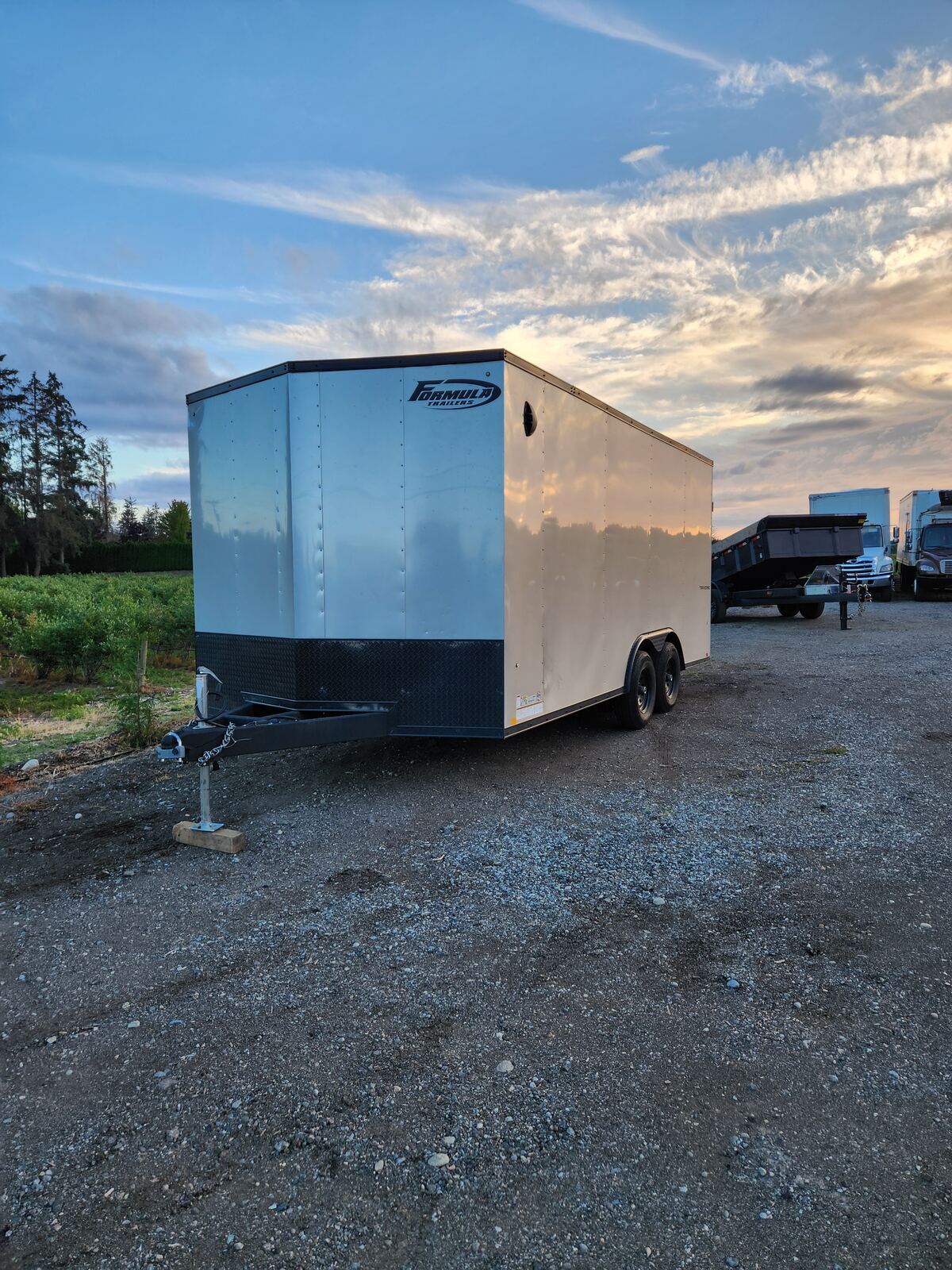
Safety chains: how should they be hooked up?
Chains are your backup if the coupler fails, so they need to be crossed under the tongue. Crossing them makes a cradle that catches the tongue if it drops. Hook each chain to a separate point on the tow vehicle frame, not the bumper or the hitch ball. Leave enough slack for turning, but not so much that the chains drag on the pavement.
Most trailers have a hook or clip on the chain end. Make sure it's fully closed, not just resting over the frame. If your chains have S-hooks, pinch them shut with pliers. You should be able to pull hard on the chains without them coming off. Also check that the chains aren't twisted or wrapped around the jack stand. That's a common mistake that makes the chains useless in an emergency.
Lights and wiring: what do you check before pulling away?
Plug in the wiring connector, either 4-pin or 7-pin depending on the trailer. Then walk behind and check every light: turn signals, brake lights, tail lights, and running lights. Have someone sit in the driver's seat and hit the brakes while you watch. If you're alone, use a brick on the pedal or check the reflection in a storefront window. Don't skip this, rain and fog make it hard for other drivers to see you.
Check the wiring for any bare spots or frays where it rubs against the hitch. A loose connection can cause lights to flicker or go out halfway down the road. If the lights don't work, don't drive off. We can usually fix a connection issue right there in the lot. Also make sure the trailer's license plate light is working, if it has one. Cops notice that stuff, and you don't want a ticket over a two-dollar bulb.
Tires and wheels: what should you look at?
Give each tire a quick once-over before you hook up. Look for cracks, bulges, or anything embedded in the tread. Press on the sidewall to check for soft spots. Trailer tires sit for a while between rentals, so they can lose pressure or develop flat spots. A tire that looks fine can blow out at highway speed, and that's a bad day on the Alex Fraser bridge.
Check the lug nuts too. They should be snug, not loose. If you have a torque wrench, use it, but a firm pull with a tire iron works in a pinch. Also look at the wheel bearings, any grease leaking from the hub is a warning sign. Spin each tire by hand and listen for grinding or clicking. If something sounds off, flag it. We'd rather swap a tire now than deal with a blowout on your way to Langley.
Mirrors and blind spots: can you see around the trailer?
Once the trailer is hooked up, sit in the driver's seat and adjust your mirrors. You need to see the sides of the trailer, not just the road behind you. If your stock mirrors don't give you a clear view, use clip-on towing mirrors or a convex spotter mirror. On a narrow street in Vancouver or Burnaby, you need to know exactly where the trailer's corners are.
Do a quick test drive around the block before you hit the highway. Turn left and right, check that you can see the trailer's tires when you're turning. If you can't see the back of the trailer, that's okay, but you should see the sides. Also check that the trailer tracks straight behind you, not at an angle. If it's pulling to one side, something's off with the hitch or the load. Better to catch that in Delta than in rush hour traffic.
Quick questions
How do I know if my truck can tow the trailer?
Tell us what you're driving when you book. We'll confirm your hitch class and whether you need a 4-pin or 7-pin wiring connector. Most standard trucks and SUVs with a Class 3 hitch handle our trailers fine. If you're unsure, call us and we'll walk through it.
What if the trailer lights don't work when I plug in?
Don't leave the lot with dead lights. Check the connection first, sometimes it's just loose. If that doesn't fix it, tell us before you go. We can usually troubleshoot it right there, whether it's a bad ground, a blown fuse in your vehicle, or a wiring issue on the trailer.
Do I need to bring my own safety chains or locks?
No, every trailer comes with its own safety chains and coupler lock. You just need to make sure they're properly attached before you pull away. We'll show you how if you're not familiar. It takes two minutes and saves you from a serious accident.
Can I tow a trailer with a car or small SUV?
It depends on the trailer and your vehicle's towing capacity. Our car haulers and dump trailers need a proper frame-mounted hitch, usually Class 3. If you have a small crossover, it likely won't work. Call us with your vehicle make and model and we'll tell you straight.
If you're planning a haul and want to make sure you're set up right, give us a call at (604) 767-7977. We'll confirm your tow vehicle and walk you through the checklist before you leave.