If you're trying to decide between an enclosed cargo trailer and an open flatbed or car hauler, the short answer is: it depends on what you're hauling and how much rain you're willing to accept. Ride On Rentals in Delta rents both types, and we'll help you match the trailer to your load, your tow vehicle, and the Lower Mainland weather. Here's how to think it through.
What are you hauling? Start with the load
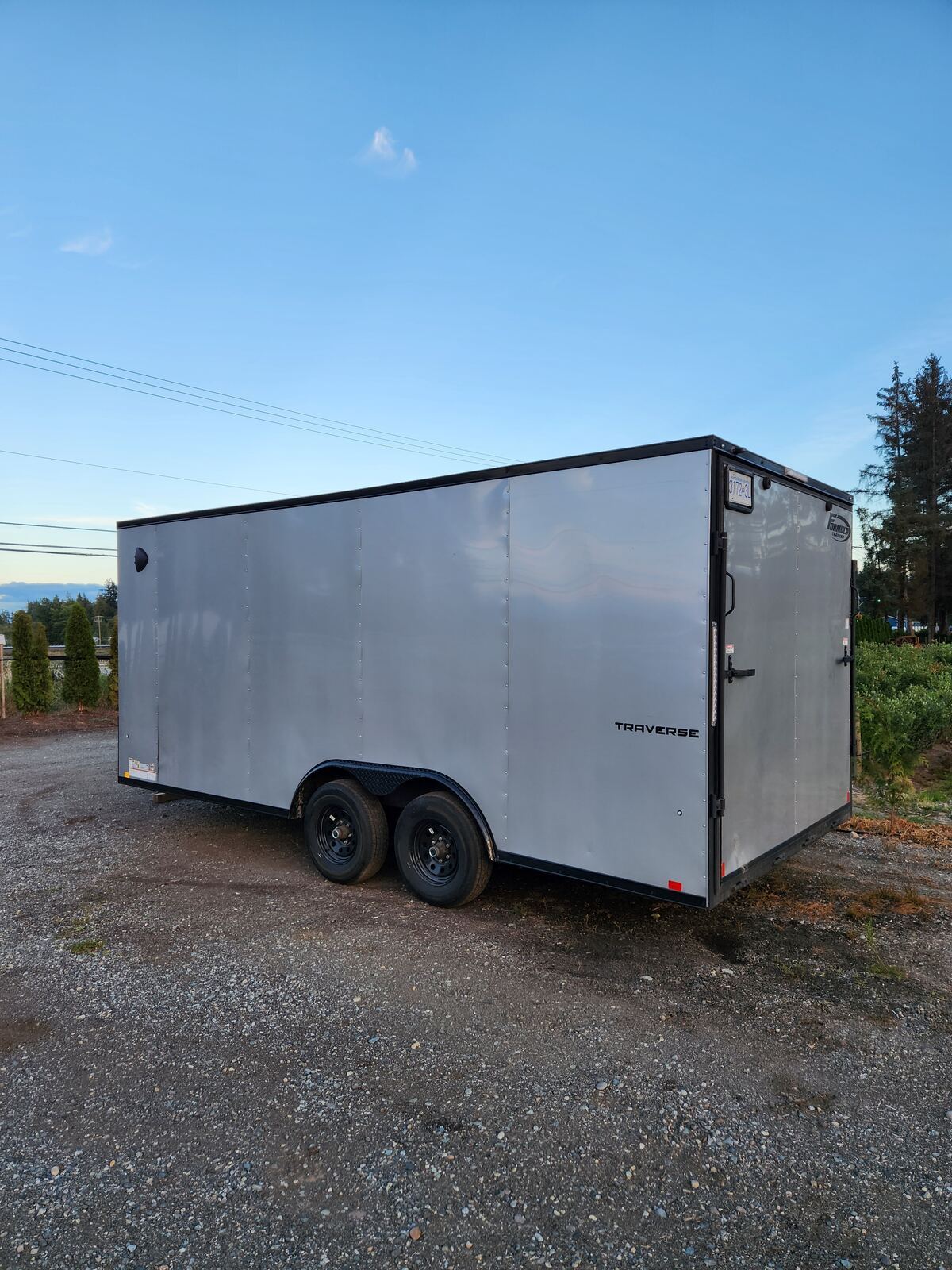
The biggest question is whether your stuff can get wet or needs to stay locked up. If you're moving furniture, boxes, tools, or anything with electronics or paperwork, an enclosed cargo trailer is the obvious pick. It keeps rain off, dust out, and gives you a lockable box so you can leave it parked overnight without worrying.
Open trailers, like our car hauler or equipment flatbed, are for things that don't mind weather. A car, ATV, dirt bike, landscaping equipment, gravel, soil, or construction debris all do fine in the open. If you're hauling a load of yard waste to the dump or moving a vehicle across town, an open trailer is simpler, lighter, and easier to load and unload.
How does rain in the Lower Mainland affect your choice?
Let's be honest, it rains here a lot. From October through April, you can count on wet roads and wet loads. If you're hauling drywall, furniture, or anything that swells, rusts, or stains, the enclosed trailer is your friend. You can load it in the dry, drive through the tunnel or over the Port Mann in a downpour, and unload dry on the other side.
Open trailers work fine in rain if the load is weatherproof. Gravel, soil, and construction debris don't care. But if you're hauling a car or ATV, rain isn't the issue, road spray is. You'll want to secure a tarp over the vehicle if it's something you care about. For most open loads, a little rain is no big deal, just plan for it.
Loading and unloading: which is easier?
Open trailers win for easy loading. You can drive a car or ATV straight up the ramps, or use a loader to drop in a pallet of bricks. No doors to swing open, no low ceiling to duck under. For heavy or bulky items, open is usually less fiddly. A flatbed also lets you strap loads from any angle, which is handy for oddly shaped equipment.
Enclosed trailers are a bit more work to load because you're working through the rear door. But once stuff is inside, it's protected and won't shift as much if you tie it down well. For a move, you can pack it like a giant closet, right up to the ceiling, and not worry about a tarp. If you're renting a dump trailer, the hydraulic lift does the unloading for you, which is a whole other advantage.
What about towing and parking in the city?
Both types tow fine behind a standard truck or SUV with a Class 3 hitch. When you book with us, tell us what you're driving and we'll confirm the trailer is compatible, including the 4-pin or 7-pin wiring connector. Open trailers are usually a bit lighter, so they're easier on fuel and easier to maneuver in tight spots, like backing into a driveway in Burnaby or parking on a side street in Vancouver.
Enclosed trailers are taller and heavier, which means you need a bit more room to turn and a bit more care when backing up. They also catch more wind on the highway, especially on the Alex Fraser or over the Port Mann. That's not a dealbreaker, but it's worth knowing if you're not used to towing a big box. For city jobs with tight lanes, an open trailer is often less stressful.
So which one should you rent?
If your load is dry, dirty, or doesn't mind weather, go open. If you need security, weather protection, or are moving household goods, go enclosed. And if you're hauling loose material like soil or gravel, a dump trailer is the smart choice because it unloads itself. There's no one right answer for everyone, it's about matching the trailer to the job.
Still unsure? That's normal. Give us a call at Ride On Rentals and tell us what you're hauling, where you're going, and what you drive. We'll point you to the right trailer and make sure it's set up for your hitch. We're based in Delta, so you can pick it up and hit the road without a long drive.
Quick questions
Can I tow an enclosed trailer with a standard SUV?
Most enclosed cargo trailers will tow behind a full-size SUV or truck with a Class 3 hitch, but it depends on the trailer's weight and your vehicle's towing capacity. When you call to book, tell us your tow vehicle and we'll confirm it's a safe match, including the wiring connector.
Do I need a special licence to rent a trailer in BC?
For recreational trailers under a certain size, a regular Class 5 licence is usually fine. We don't get into legal specifics here, but if you have questions about your licence or the trailer's requirements, ask when you book. We'll help you figure out what's needed for your situation.
What if it rains while I'm hauling an open trailer?
If your load can handle rain, no problem. If it can't, you should use an enclosed trailer. For open loads that are borderline, bring a tarp and straps. We can't control the weather, but we can help you pick the trailer that keeps your stuff as dry as it needs to be.
How do I know if my hitch is compatible?
Most modern trucks and SUVs have a Class 3 receiver, but you'll also need the right ball size and wiring connector, either 4-pin or 7-pin. When you book, tell us your vehicle make and model, and we'll tell you exactly what you need or what we can provide.
If you're still going back and forth, just call us at (604) 767-7977 and tell us what you're hauling. We'll help you pick the right trailer and check availability for your dates.