Loading a car onto a car hauler trailer is straightforward if you take it step by step. You need a level spot, a good spotter, and the right straps. At Ride On Rentals in Delta, we rent car hauler trailers that hook up to your truck or SUV with a Class 3 hitch. We'll confirm your tow vehicle before you book, so you know everything fits. Here's how to do the job right.
What do you need before you start?
First, check that your tow vehicle has a Class 3 hitch and the right wiring, usually a 4-pin or 7-pin connector. When you call Ride On Rentals, tell us what you're driving and we'll confirm compatibility. You also need ratchet straps that can handle the car's weight, plus wheel chocks and a spotter. Don't skip the spotter, especially if you're backing up or pulling forward onto the trailer.
Find a flat, paved area to load. A slight incline can work if you position the trailer so the car rolls up, but flat is safest. Avoid loading on a slope where the trailer could shift. If you're on a busy street, pick a quieter side road or a parking lot. Rain is common here in the Lower Mainland, so give yourself extra time and watch for wet ramps.
How do you position the trailer and ramps?
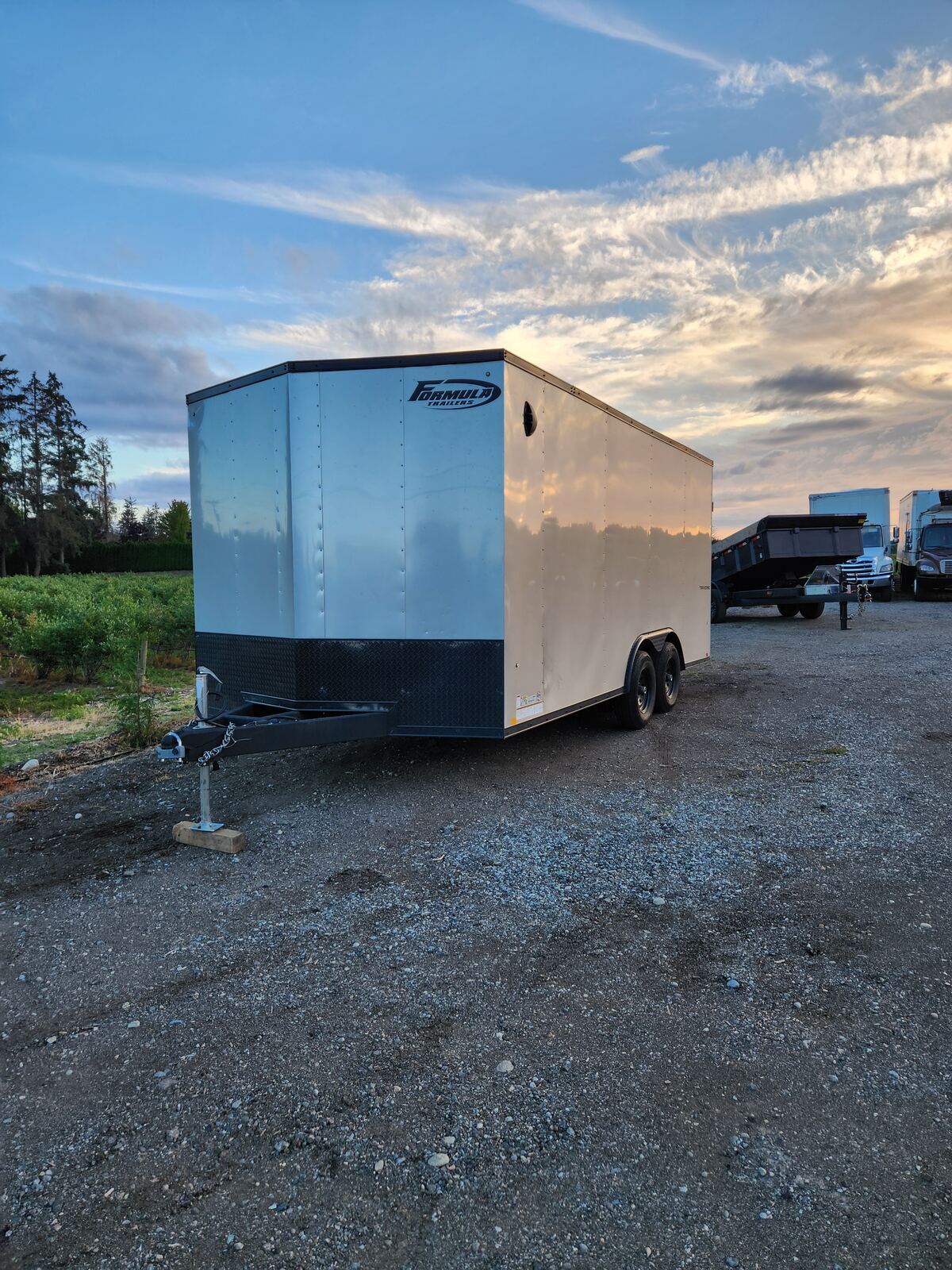
Set the trailer on level ground and chock the trailer wheels so it doesn't move. Lower the trailer jack so the tongue is stable, and make sure the trailer is parallel to the car. Attach the ramps to the trailer's loading edge, making sure they're seated properly and not at a steep angle. If the ramps feel loose, adjust them before you drive up.
A spotter stands outside the car, not directly in front or behind, and guides you with hand signals. Agree on signals before you start, like a thumbs up for go and a stop hand for halt. The spotter should watch the car's wheels and the ramps, not just the bumper. This is especially important if you're loading a low car that might scrape the ramps.
What's the safest way to drive the car onto the trailer?
Drive slowly and steadily in first gear or low range, if your car has it. Keep the car centered on the ramps and the trailer. Your spotter should be at the side, watching the wheels. Stop when the front wheels are just past the trailer's center line, then continue slowly until the rear wheels are on the trailer. Once the car is fully on, put it in park and engage the parking brake.
If you're loading a front-wheel-drive car, you can drive it up normally. For rear-wheel-drive, same thing. If the car doesn't start or you're moving a non-runner, use a winch if you have one, but that's a different setup. For most cars, driving up is fine. Just keep your speed low and your hands on the wheel, and don't jerk the clutch or brake.
How do you secure the car once it's on the trailer?
Use ratchet straps at the wheels, not just the frame. Loop the straps around the tires and the trailer's tie-down points, then tighten them evenly. The car should have four straps, one per wheel, or at least two crossing straps if the trailer has a center rail. Check that the straps are tight and not rubbing against sharp edges. Give each strap a tug to test it.
Also, leave the car in gear or park, and set the parking brake. Some people prefer to leave it out of gear to reduce stress, but park is fine. After tightening, walk around the trailer and check the straps and the car's position. If anything looks off, loosen and redo. A loose strap can cause the car to shift during a bridge crossing, like the Massey Tunnel or the Alex Fraser, so it's worth the extra minute.
Any tips for unloading?
Unloading is basically the reverse, but you have to be careful. Release the straps, then have your spotter guide you as you back the car down. Use low gear and light brake pressure. If the trailer is on a slope, you might need a second spotter to watch the rear. Always have someone outside to help, especially if you're on a busy road.
After unloading, store the ramps and straps properly. If you're returning the trailer to Ride On Rentals, give it a quick sweep to remove any dirt or debris. That keeps things simple for the next renter. And if you're not sure about any step, just ask when you pick up the trailer. We can go over the basics and answer your questions.
Quick questions
Can I load a car without a spotter?
It's not recommended. A spotter can see the wheels and ramps from angles you can't, especially when the car's hood blocks your view. If you're alone, you can use mirrors and go very slowly, but a spotter is safer. Ask a friend or neighbor to help for ten minutes.
Do I need to use wheel chocks on the trailer?
Yes, you should use wheel chocks on the trailer before loading, and also on the car after it's on the trailer. Chocks prevent the car from rolling if the straps loosen. Most rental trailers come with chocks, but you can also bring your own. Always set them before you drive up.
What if my car is too low to clear the ramps?
If the car scrapes on the ramps, you can try using a set of low-profile ramps or a longer ramp to reduce the angle. Some people use a piece of wood to extend the ramp, but that can be risky. If you're unsure, call Ride On Rentals and ask for advice. We can help you figure out if the trailer will work for your car.
How do I know if my truck can tow the car hauler?
You need a Class 3 hitch and a tow vehicle that's capable of handling the trailer plus the car. When you book, tell us your vehicle's make and model, and we'll confirm compatibility. We can also check the wiring for the lights. Don't guess, because towing too heavy is dangerous.
If you're planning to move a car and need a reliable car hauler trailer, give Ride On Rentals a call at (604) 767-7977. We'll check your tow vehicle and get you set up for a safe haul.