Loading a dump trailer right is about two things: keeping it stable on the road and making sure the bed lifts without a fight. Get the weight forward and even, and you're most of the way there. Ride On Rentals in Delta, BC rents hydraulic dump trailers for yard waste, gravel, soil, and renovation debris. Here's how to load one like you've done it before.
Why does load placement matter so much?
A dump trailer that's loaded heavy at the back will wag behind your truck, especially on the highway between Delta and Vancouver. That tail-heavy feel gets worse when you brake or hit a bump. Heavy at the front, on the other hand, keeps the trailer planted and the hitch weight where it should be. You want the bulk of the material sitting over or just ahead of the trailer's axle. This keeps the trailer tracking straight and reduces the chance of sway that can make a trip across the Massey Tunnel feel sketchy.
Even side-to-side loading matters just as much. If you pile soil on one side only, the trailer will lean, and you'll feel it in the steering. It also makes the dump bed twist when you raise it, which can bind the lift mechanism and make the bed come up crooked. So spread material across the full width as you load, not just in a mound down the middle or along one rail. Take a few extra minutes to rake it level before you hit the road.
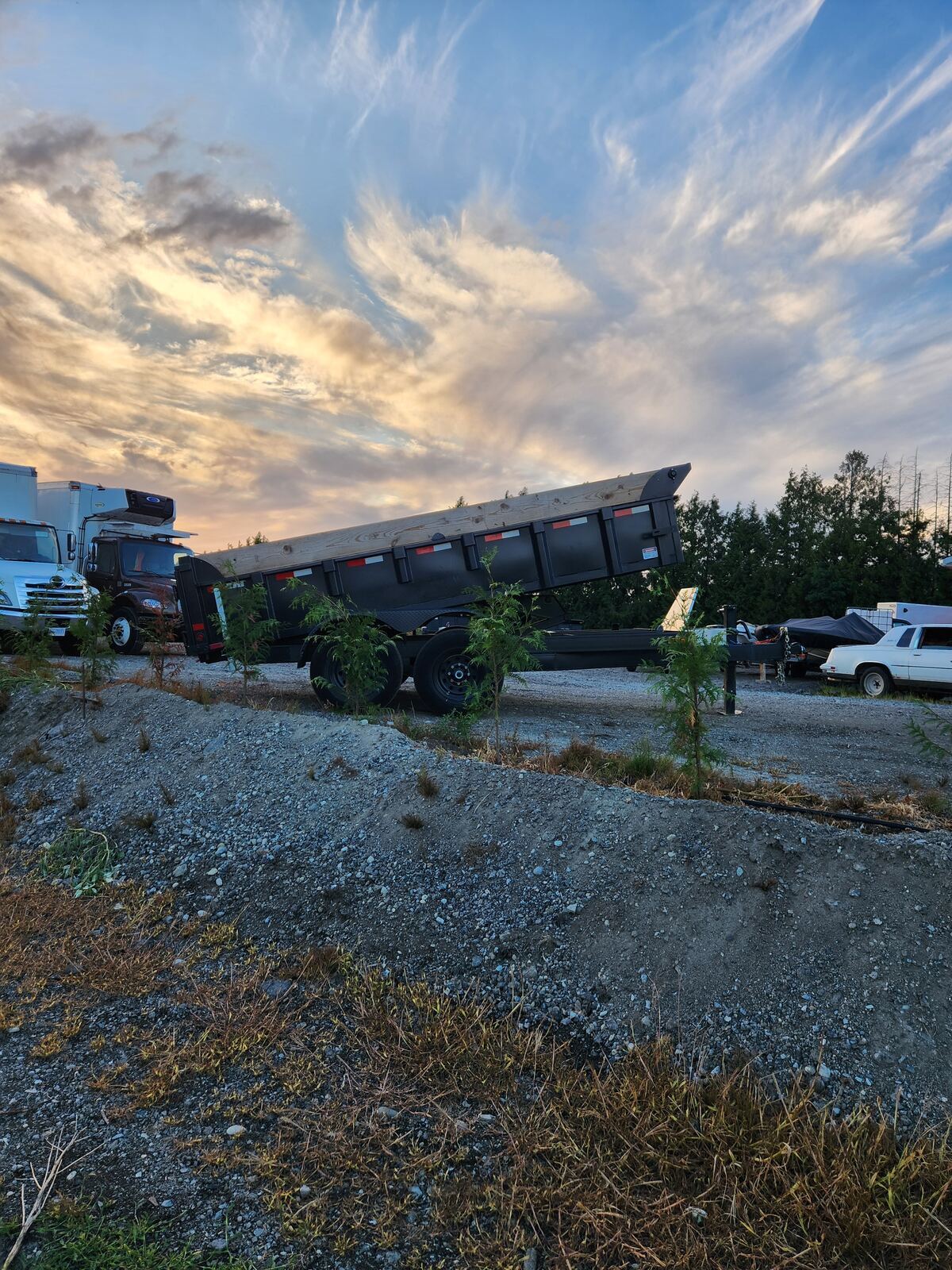
How do you load a dump trailer for a clean tip?
Think about how the bed dumps: it lifts from the front, so material needs to slide back and out. If you pack material tight against the front wall, it can hang up when the bed rises. Leave a little space at the front, or at least don't ram the load into the wall. Wet, sticky clay or sod can cling, so break up big clumps as you load. A shovel or rake used right at the start saves you from poking at the bed later.
Also, don't overfill. Keep the load level with the sides or slightly below. If you pile it high in the middle, it can shift forward or backward when you drive, and it might catch the wind on the Port Mann Bridge. A level load dumps cleaner and keeps the center of gravity lower, which helps on those off-camber lots in the Tri-Cities. Overfilling also makes the tailgate harder to close and can spill material on the road, which is a hazard for other drivers.
What about the tow vehicle and hitch?
Before you even start loading, make sure your truck or SUV can handle the trailer. Most dump trailers need a Class 3 hitch, and you'll want to confirm your vehicle's towing capacity with the owner's manual. When you book with Ride On Rentals, tell us what you're driving and what you're hauling, and we'll check that the hitch and wiring will work. That's a quick call, not a hassle. Plenty of people show up with the wrong setup, and it's easier to sort it out beforehand.
The trailer's wiring should be a standard 4-pin or 7-pin connector, depending on the trailer. Make sure your vehicle has the matching plug. You also want to check that the trailer's chains cross under the hitch and that the breakaway cable is attached. Those little steps matter more when you're hauling a heavy load of gravel down Hwy 91. A quick walk around the trailer before you leave the yard takes two minutes and saves you from a bad surprise on the road.
How do you unload safely and keep the trailer level?
When you're ready to dump, park on the most level ground you can find. If you're on a slope, the load can shift to one side and make the trailer unstable as the bed rises. Also, make sure the trailer is level side to side before you hit the lift. On a hillside lot in Coquitlam, that might mean repositioning the truck a bit. It's worth the extra minute to avoid a tipped trailer or a load that comes out in a rush.
Raise the bed slowly and keep the tailgate latched until the bed is up a few feet, then release it. If the load sticks, don't shake the trailer by jerking the truck. Lower the bed, break up the material with a shovel or rake, and try again. Never stand under the raised bed, and keep kids and pets clear. Dump trailers are simple, but they're not toys. Take your time, and the whole job goes smoother.
What should you do before you start loading?
Give the trailer a quick once-over before you put anything in it. Check that the deck is clean and dry, especially if you're hauling soil or gravel that can slide on a wet surface. Make sure the tailgate hinges and latches move freely, and that the hydraulic fluid level looks right if you can see the reservoir. A little maintenance check up front means you won't be stuck with a stuck bed halfway through the job.
Also think about how you'll secure the load if you're hauling something that isn't loose material. For things like bundled debris or large chunks of concrete, you might need straps or a tarp. Loose material should be covered if you're going any distance, because wind will take the fines off the top and leave a mess on the road. Ask us when you pick up if you're not sure what you need.
Quick questions
Can I load a dump trailer with a skid steer or other heavy equipment?
That depends on the trailer's capacity and your tow vehicle. Most dump trailers are meant for loose material like soil or gravel, not for driving heavy machines into. If you need to haul equipment, ask about our equipment flatbed trailers instead. Call us with what you're hauling and we'll point you to the right trailer.
What if I don't have a Class 3 hitch?
You'll need a Class 3 hitch for most dump trailers. If your vehicle only has a Class 1 or 2, the trailer won't be safe to tow. We can confirm what you have when you call. If your vehicle isn't set up for it, you might consider renting a different trailer type or using a different vehicle.
How do I know if the load is too heavy?
You shouldn't guess. Check the trailer's capacity, which is listed on the trailer itself, and compare it to what your vehicle can tow. Also watch how the truck sits: if the rear squats a lot or the steering feels light, you're overloaded. When in doubt, take less material or make an extra trip.
Do you deliver dump trailers to my site?
No, we're a pickup-only rental in Delta. You hook up and go. That's part of why we make sure your tow vehicle is compatible before you book. It keeps things simple and gets you on the road fast.
If you're planning a haul and want to know which dump trailer fits your job, give Ride On Rentals a call at (604) 767-7977. We'll check your tow vehicle and confirm availability for your dates.