If you're renting an open flatbed trailer from Ride On Rentals in Delta, you need to know how to keep your load safe and legal on Lower Mainland roads. Rain, wind, and bridge crossings can shift things fast. Here's the plain-talk guide to tarping and strapping so you don't lose gear or cause a hazard. We'll cover direction, spacing, and the little stuff people forget.
Which Way Should the Tarp Face?
Tarp direction matters more than people think. You want the tarp to shed water, not catch it. Lay the tarp so the seams run downhill, not across the wind. If you're hauling something tall like furniture or equipment, drape the tarp over the top and let it hang down the sides. The back edge should overlap the tailgate or the end of the load so rain doesn't blow in while you're driving.
On a flatbed, you also want to avoid the tarp flapping. A loose tarp acts like a sail, especially on the Port Mann or Alex Fraser bridges where crosswinds hit. Pull it tight from the center outward. If you have a peaked load, run the tarp over the peak and tie it down on both sides. That way water runs off the ridge instead of pooling in the middle.
How Many Straps Do You Really Need?
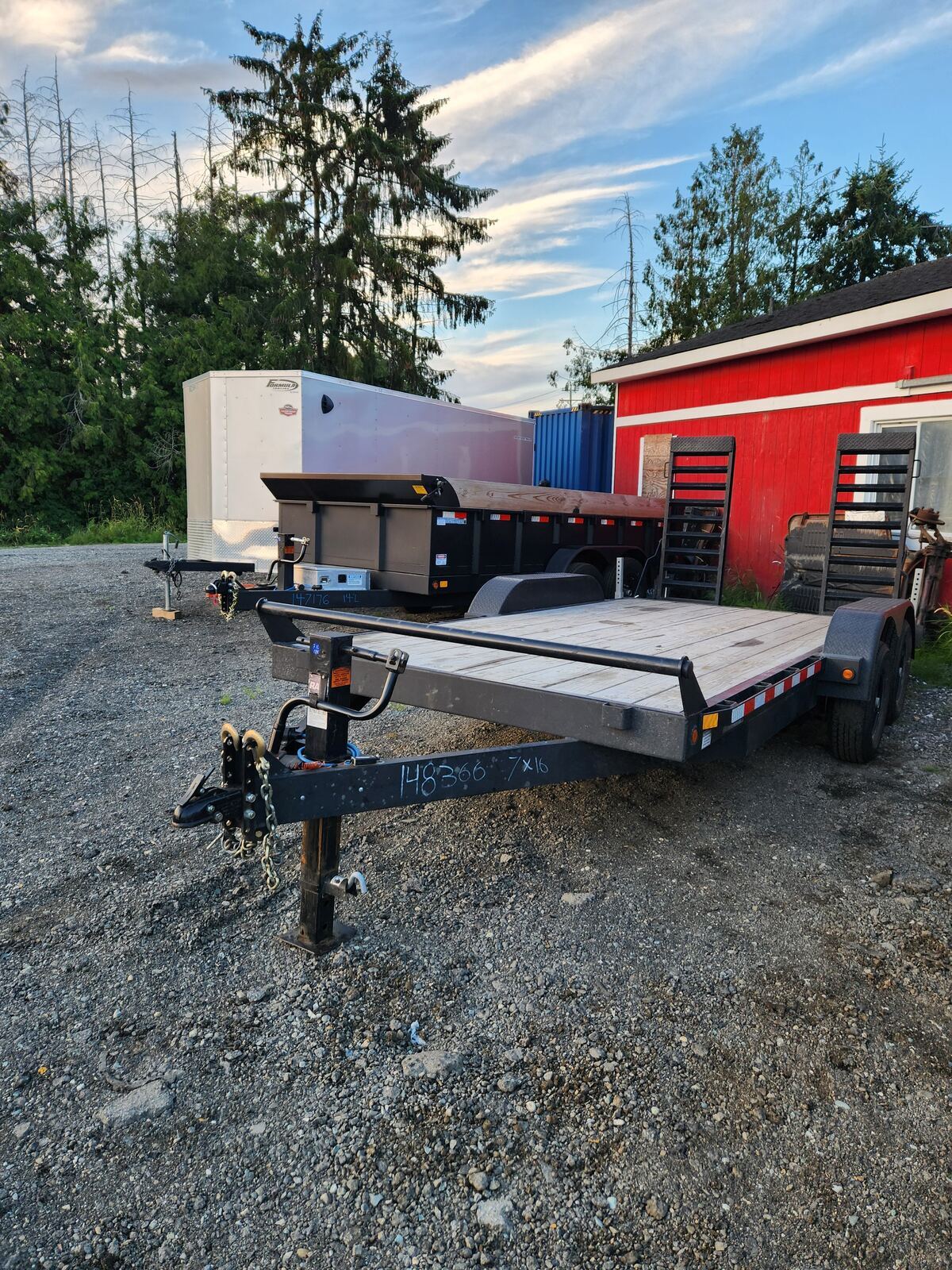
The short answer is more than you think. For a standard 7x16 flatbed, you need straps at the front, middle, and back of the load. Spacing should be close enough that no section of the tarp or cargo can lift or shift. A good rule is one strap every 4 to 6 feet along the length. If you're hauling loose items like gravel or soil, you need a tarp and enough straps to seal the edges completely.
Don't rely on a few ratchet straps at the corners. That's how loads end up on the highway. Use the tie-down points on the trailer frame, not the tarp itself. The tarp is just a cover, not a restraint. Your straps should go over the load and hook to the trailer rails. For big items like a car or ATV on a car hauler, you need separate straps for the vehicle and then tarp over it if you want to keep it dry, though most people skip the tarp on vehicles.
What About Loose Items and Small Debris?
Loose items are the biggest headache. Anything that isn't strapped down will move, and on a bumpy road like the Massey Tunnel approach, it can bounce right off. For loose material like yard waste, soil, or gravel, you need a tarp that covers the entire load and cinches down tight. Use a tarp with grommets and run a rope or bungee through them, then secure to the trailer. Don't leave any gaps where small pieces can escape.
For tools or equipment, put them in a box or tie them individually. Even a shovel can become a projectile if it slides out. If you're hauling lumber or pipes, stack them evenly and strap them as a bundle. The key is to think about what happens when you brake hard or take a sharp turn. If it can move, it will. Take the extra five minutes to double-check everything before you pull out of the yard.
Do You Need a Specific Hitch or Wiring?
Most flatbeds tow fine behind a standard truck or SUV with a Class 3 hitch. But you also need the right wiring connector, usually a 4-pin or 7-pin. The 4-pin handles basic lights, while the 7-pin also powers electric brakes. When you book with Ride On Rentals, tell us what you're driving and we'll confirm your hitch and wiring are compatible. Don't assume it's ready to go, especially if you have an older vehicle or a aftermarket hitch.
A quick check before you hook up saves a lot of hassle. Look at your hitch ball size and make sure it matches the coupler on the trailer. Check that the safety chains cross under the tongue and attach to the vehicle frame. And test your lights before you leave. If the trailer lights don't work, you're a hazard on the road, and in BC, that's a fine you don't want. We'll help you get it sorted at pickup, but it's on you to be safe once you're out there.
What's the Best Way to Tie Down a Tarp in Wind?
Wind is your enemy, especially on the flat stretches near Delta and Richmond. To keep a tarp from blowing off, use a technique called a 'drum roll' at the edges. Roll the tarp edge around a rope or a small piece of wood, then tie it down. This spreads the pressure and stops the grommets from tearing. Also, crisscross your straps over the top of the tarp, not just straight across. That holds the tarp down and prevents it from ballooning.
If you're hauling something tall like a fridge or a stack of plywood, use a front tarp or a windbreak. You can rig a piece of plywood at the front of the trailer to deflect air over the load. That's a common trick for hauling big boxes. But the simplest thing is to drive slower. On the highway, keep your speed down, especially in crosswinds. It's not a race. Getting there with your load intact is what matters.
Quick questions
How tight should I pull the straps?
Tight enough that the load doesn't move when you push on it, but not so tight that you dent or crush the cargo. Use a ratchet strap and tighten until there's no slack, then give it a few more clicks. Check them after a short drive, then again after an hour. Straps can loosen as the load settles.
Can I use a tarp with holes in it?
No. A tarp with holes will let water in and can tear further in the wind. If you rent a flatbed from us, ask if we have a tarp available, or bring your own in good condition. Check for rips at the grommets and along the edges before you tie it down.
Do I need to tarp a load of gravel?
Yes, absolutely. Loose gravel and soil will blow off and create a hazard for other drivers. In BC, you can be fined for unsecured loads. Tarp it completely and make sure the tarp overlaps the sides and back. Use enough straps to keep it sealed.
What's the best way to secure an ATV on a car hauler?
Use four straps, one on each corner, attached to the ATV's frame, not the handlebars or racks. Cross the straps in an X pattern for extra stability. Then, if you want to tarp it, use a tarp that covers the whole ATV and tie it down separately. Don't let the tarp touch the hot exhaust.
If you're not sure which trailer or tarp setup works for your load, call Ride On Rentals at (604) 767-7977 and we'll walk you through it. We're in Delta and open for pickup, just give us a shout.