Jackknifing happens when the trailer turns sharper than the truck and folds up beside you. It feels embarrassing, but it's fixable. The trick is slow hands and small inputs. Ride On Rentals in Delta sees this all the time with folks picking up enclosed cargo trailers or car haulers. You can learn this in one parking lot session. Here's the plain version.
Where Should Your Hands Go on the Wheel?
Put your hand at the bottom of the steering wheel. Six o'clock position. When you want the trailer to go left, move your hand left. Want it to go right, move your hand right. This feels backwards at first because you're used to driving forward. But the bottom of the wheel moves the same direction as the trailer's rear. Most people grab the top of the wheel and panic. That's how you end up with the trailer jackknifed across a Langley driveway. Keep your hand at the bottom and you'll naturally make smaller corrections. You're not steering the truck. You're steering the trailer's back end.
Practice this in an empty lot before you need it. Find a spot in Delta or Surrey with no cars around. Put your hand at six o'clock and just move it left and right slowly while backing up. Watch what the trailer does. You'll notice that even a two inch movement of your hand changes the trailer's path noticeably. This is the feel you want to build. Once you have that, you can handle most backing situations without thinking too hard about it. The muscle memory does the work for you.
Why Do Small Inputs Matter So Much?
A trailer reacts slowly at first, then suddenly. If you crank the wheel hard, the trailer keeps swinging even after you straighten out. By then it's too late. Small inputs give you time to see what's happening and adjust. Think of it like turning a big boat. You nudge, wait, see, then nudge again. This is especially true with a long car hauler or an equipment flatbed. Those trailers have a lot of length behind the axle, so they swing wide and keep swinging if you overcorrect.
In tight spots like a Vancouver alley or a Richmond loading bay, big steering movements are your enemy. Keep the wheel movement to a few inches at a time. Let the trailer respond. If it starts angling too much, stop, pull forward a few feet to straighten out, then try again. Pulling forward is your reset button. Use it freely. There is no penalty for pulling forward. Every experienced driver does it. The ones who look smooth are just doing it faster and with less panic than you are.
What Do You Do When the Trailer Starts to Jackknife?
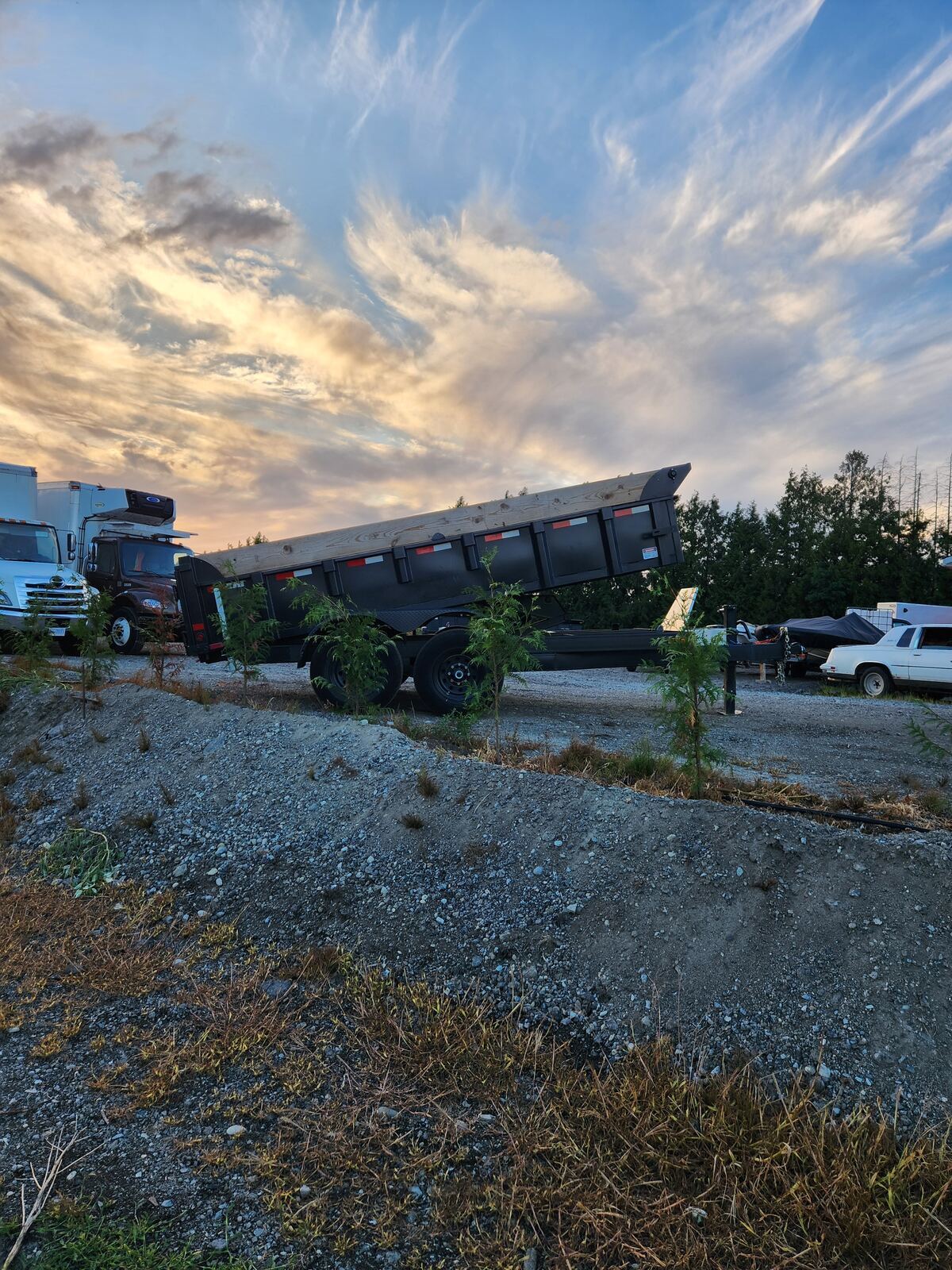
First, stop. Don't keep backing up hoping it'll fix itself. Put the truck in drive and pull forward slowly until the trailer straightens out behind you. This undoes the angle and gives you a fresh start. Then back up again with smaller inputs. Pulling forward to reset is the single best habit you can develop. It works every time, no matter what kind of trailer you're pulling. Whether it's a small enclosed cargo trailer for a move or a hydraulic dump trailer full of gravel, the reset is the same.
Most jackknife situations happen because someone kept backing up past the point of no return. The trailer angle gets too sharp and the hitch binds. Pulling forward releases that pressure. Do this as many times as you need. Nobody's timing you. A clean three point reset beats a bent fender every time. If you're on a busy street in Burnaby or Coquitlam, find a driveway or a side street to do your reset. Don't block traffic. But don't rush either. Take the extra minute to get it straight before you continue.
How Should You Practice Before a Real Job?
Find an empty parking lot in Delta or Surrey on a Sunday morning. Bring some cones or empty cardboard boxes. Set them up like a parking spot or a driveway entrance. Then back toward them slowly with your hand at six o'clock. Do it ten times. You'll feel the rhythm by the fifth try. Make the course tighter each time. Start with a wide open space, then narrow it down. This builds your confidence gradually instead of throwing you into a hard situation right away.
Practice with the actual trailer you'll be using. A small enclosed cargo trailer behaves differently than a long car hauler. If you're renting from Ride On Rentals, ask when you pick up in Delta if you can do a quick loop around the lot. The staff will confirm your hitch and wiring before you leave, so you're not learning on the road. Also practice backing up on a slight slope if you can find one. That changes the feel because the trailer wants to roll. You'll need to use your brakes more gently and let the truck do the work.
What About Hills and Tight Driveways?
Backing downhill is trickier because the trailer wants to run away from you. Use your brakes gently and let the truck roll. Backing uphill, you'll need a bit more throttle but keep it steady. If you're on a hillside lot in Coquitlam or the Tri-Cities, take it slower than you think you need to. Gravity is working against you in both directions. On a downhill, the trailer pushes the truck. On an uphill, the truck has to pull against the weight. Neither is impossible, but both require patience.
For tight driveways, position the truck wider than feels natural. Give the trailer more room to swing. If you're not sure, get out and look. Walk around the trailer. Check both sides. There's no shame in doing that ten times. Better than guessing and clipping a fence post. Also watch for overhead branches and low wires. A trailer is taller than your truck, especially an enclosed one. That's a mistake people make in older neighborhoods with mature trees. Check the height before you commit to a spot.
Quick questions
How do I know which way to turn the wheel when backing up?
Put your hand at the bottom of the steering wheel. Move your hand the direction you want the trailer to go. Left hand moves left, trailer goes left. Right hand moves right, trailer goes right. Small movements only.
What's the fastest way to fix a jackknife?
Stop immediately, put the truck in drive, and pull forward slowly until the trailer is straight behind you. Then start backing again with smaller steering inputs. Pulling forward resets the angle.
Can I back up a trailer with a standard SUV?
Most standard trucks and SUVs with a Class 3 hitch can handle it. Tell the rental place what you're driving and what you're hauling. They'll confirm compatibility and check your 4-pin or 7-pin wiring before you leave Delta.
How long does it take to learn backing up?
Most people get the basics in one practice session of about twenty minutes in an empty lot. The key is slow hands and pulling forward to reset. After a few tries it starts to feel natural.
If you're planning a move or hauling yard waste and need a trailer, call Ride On Rentals at (604) 767-7977 to check availability and get the right size for your tow vehicle.