If you're thinking about renting a trailer in the Lower Mainland, the first question is usually whether your SUV can handle it. The short answer is: most can, but you need to check a few things before you book. At Ride On Rentals in Delta, we help people from Vancouver to Langley figure this out every day. Bring us your vehicle details, and we'll confirm what works.
What Does Your Owner's Manual Say?
Your owner's manual is the starting point. It lists the maximum towing capacity for your specific SUV, and that number matters more than what a friend or forum says. You'll also find the recommended hitch class and any notes about trailer brakes or weight distribution. Look for the section on towing or trailering, usually in the index.
Keep in mind that capacity assumes a properly equipped vehicle, not just the engine. Some SUVs need an optional tow package to reach their full capability. If your manual says you need a factory tow package and you don't have it, that changes what you can pull. When you call us, have the make, model, and year handy, plus whether it has the tow package.
Do You Have the Right Hitch Receiver?
Most SUVs that can tow have a receiver hitch, but the class matters. For our rental trailers, you'll typically need a Class 3 hitch, which is common on mid-size and full-size SUVs. A Class 1 or 2 hitch, often found on smaller crossovers, isn't built for the weight of a loaded trailer. Check the hitch itself for a label or stamp that shows the class and weight limit.
If your SUV has a hitch but you're not sure what class it is, measure the opening. A Class 3 receiver is usually 2 inches square, while Class 1 and 2 are often 1.25 inches. That 2-inch opening is what our trailers are set up for. If you have the smaller size, you might need an adapter, but that affects capacity, so it's better to ask us first.
Is Your Wiring Ready for Trailer Lights?
Your trailer's lights need to work, and that means your SUV needs the right wiring connector. Most modern SUVs with a tow package have a 4-pin or 7-pin plug near the hitch. A 4-pin covers basic lights: brake, turn signals, and running lights. A 7-pin adds electric brake control and a power line, which is useful for heavier trailers.
If your SUV doesn't have a connector, you might need a wiring harness or an aftermarket kit. That's a job you can do yourself, but it takes time and some know-how. Before you book, check what's behind the bumper or under the rear cargo area. When you call us, tell us what connector you have, and we'll match you with a trailer that plugs in without surprises.
What About the Tongue Weight and Loading?
Towing isn't just about the total weight; it's also about how that weight sits on the hitch. The tongue weight, which is the downward force on the hitch ball, needs to stay within your SUV's limits. Too little tongue weight can make the trailer sway, and too much can overload your rear suspension. Your manual will list a tongue weight range.
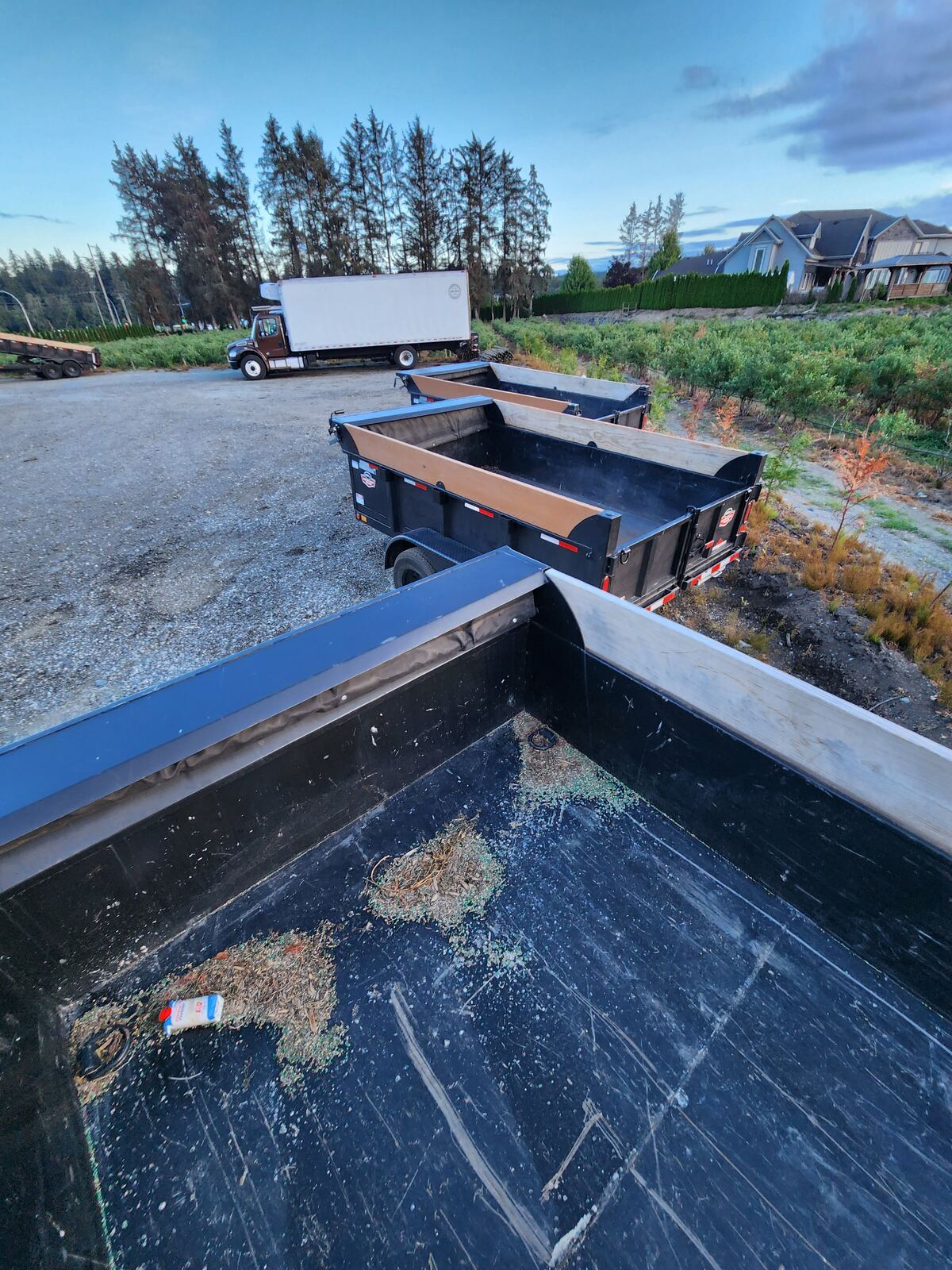
Loading the trailer properly is part of that. Put heavier items over the axle, not at the front or back, and secure everything so it doesn't shift. For dump trailers, keep the load level and don't overfill. If you're hauling yard waste or gravel, remember that wet material is heavier than it looks. We'll give you basic loading tips when you pick up, but the final call on weight is yours.
How Do You Confirm Before Booking?
The easiest way to avoid a mismatch is to talk to us before you reserve. Tell us the exact make, model, and year of your SUV, plus the hitch class and wiring connector. We'll confirm whether the trailer you want will work with your vehicle. If it won't, we'll suggest a different trailer or let you know what you'd need to add.
Most of our trailers tow fine behind a standard truck or SUV with a Class 3 hitch, but we'd rather check than assume. Rain, hills, and bridge traffic around Vancouver and Richmond make it important to have the right setup. Give us a call at (604) 767-7977 or email [email protected] with your vehicle info, and we'll sort it out.
Quick questions
Can a small SUV like a RAV4 or CR-V tow a rental trailer?
It depends on the model and whether it has a tow package. Many small SUVs can tow our smaller trailers, but you'd need a Class 3 hitch and the right wiring. Check your owner's manual for the towing capacity, then call us with your vehicle details to confirm.
What if my SUV has a 1.25-inch hitch receiver?
A 1.25-inch receiver is usually Class 1 or 2, which isn't built for most rental trailers. You might find an adapter, but it can reduce capacity and isn't safe for heavier loads. Better to ask us before you try, or consider a different vehicle.
Do I need trailer brakes for a rental trailer?
Trailer brakes are required for heavier trailers, but we don't quote specific weights. If your trailer has brakes, your SUV needs a brake controller and a 7-pin connector. We'll tell you what's needed when you book, based on the trailer and your vehicle.
Can I tow a dump trailer with a standard SUV?
Some SUVs can, but dump trailers are heavier because of the lift mechanism and the load. You'll need a strong tow rating and a Class 3 hitch. We'll go over the trailer's requirements with you before you reserve, so you know it's a safe fit.
Not sure if your SUV is up for it? Call Ride On Rentals at (604) 767-7977 and we'll help you pick a trailer that works.